PixGenN
Best AI Influencer Maker Tools: 5 Picks for 2026
Summary
An AI influencer maker helps creators and brands design a virtual persona, generate consistent images or videos, and publish social content without organizing a traditional model shoot. For users who want to create AI influencer videos with a practical mix of avatar-style generation, free testing, multilingual voices, commercial-use output, and flexible model choice, PixGenN is a strong starting point. Other tools on this list may fit better for image-first personas, cinematic influencer scenes, lip-sync workflows, or experimental creative production.
What Is an AI Influencer Maker?
An AI influencer maker is a tool that helps users create a synthetic social media personality. In most workflows, that means designing a consistent face or avatar, generating photos or short videos, adding voice or lip sync, and building repeatable content for platforms like Instagram, TikTok, YouTube Shorts, and brand campaigns.
The best tools in this category are not all the same. Some are image-first platforms for character portraits. Some focus on video generation. Others are closer to social-avatar studios with face consistency, talking avatar tools, motion control, and creator-style content templates.
A good AI influencer maker free option should let users test the character style before paying. A paid workflow should go further: stable identity, commercial rights, reusable visual style, short-form video output, and enough control to avoid generic synthetic content. For brands, legal and disclosure considerations also matter because a virtual influencer can still function as an endorser or advertising character.
5 Best AI Influencer Maker Tools
The tools below are ranked by workflow fit, not by hype. The key question is simple: does the platform help someone make influencer AI content that looks consistent, usable, and suitable for social publishing?
1. PixGenN: Best Balanced AI Influencer Video Workflow
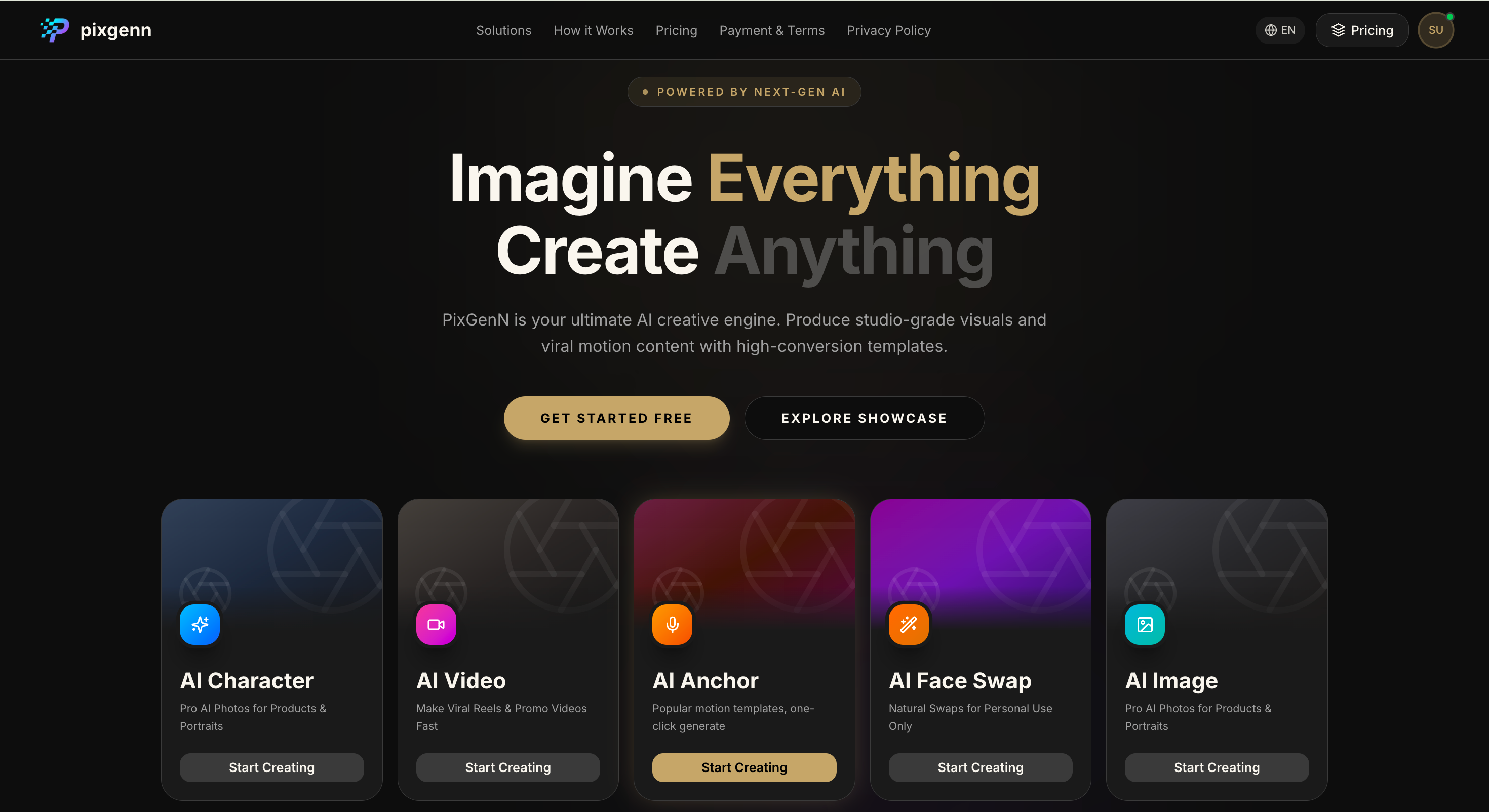
PixGenN is best for users who want to move beyond static AI portraits and create video-based virtual influencer content. It is positioned as an AI video generator for creating videos from images, which makes it useful when a creator already has a character image, product visual, or avatar concept and wants to turn it into social-ready content.
Its advantage is balance. The platform supports AI virtual avatar creation, free trial access, fast generation, commercial-use output, multilingual voice support, and multiple model options. That combination makes it practical for creators, ecommerce brands, educators, agencies, and small teams that want an AI influencer workflow without relying on a full studio setup.
Pros:
Balanced fit for AI influencer videos, avatar content, and commercial social posts.
Useful when the goal is video, not only profile photos.
Good option for testing several influencer looks or campaign angles.
Multilingual voice support helps with international content.
More flexible than tools focused only on still images.
Cons:
Users focused only on high-fashion still portraits may prefer image-first creative suites.
Output quality depends on the source image, prompt, script, and selected model.
Social scheduling, audience analytics, and influencer management may require separate tools.
Best for:
Creators, brands, educators, and agencies that want a flexible AI influencer maker for avatar-led videos, social content, and commercial campaigns.
2. Higgsfield: Best for Cinematic AI Influencer Scenes
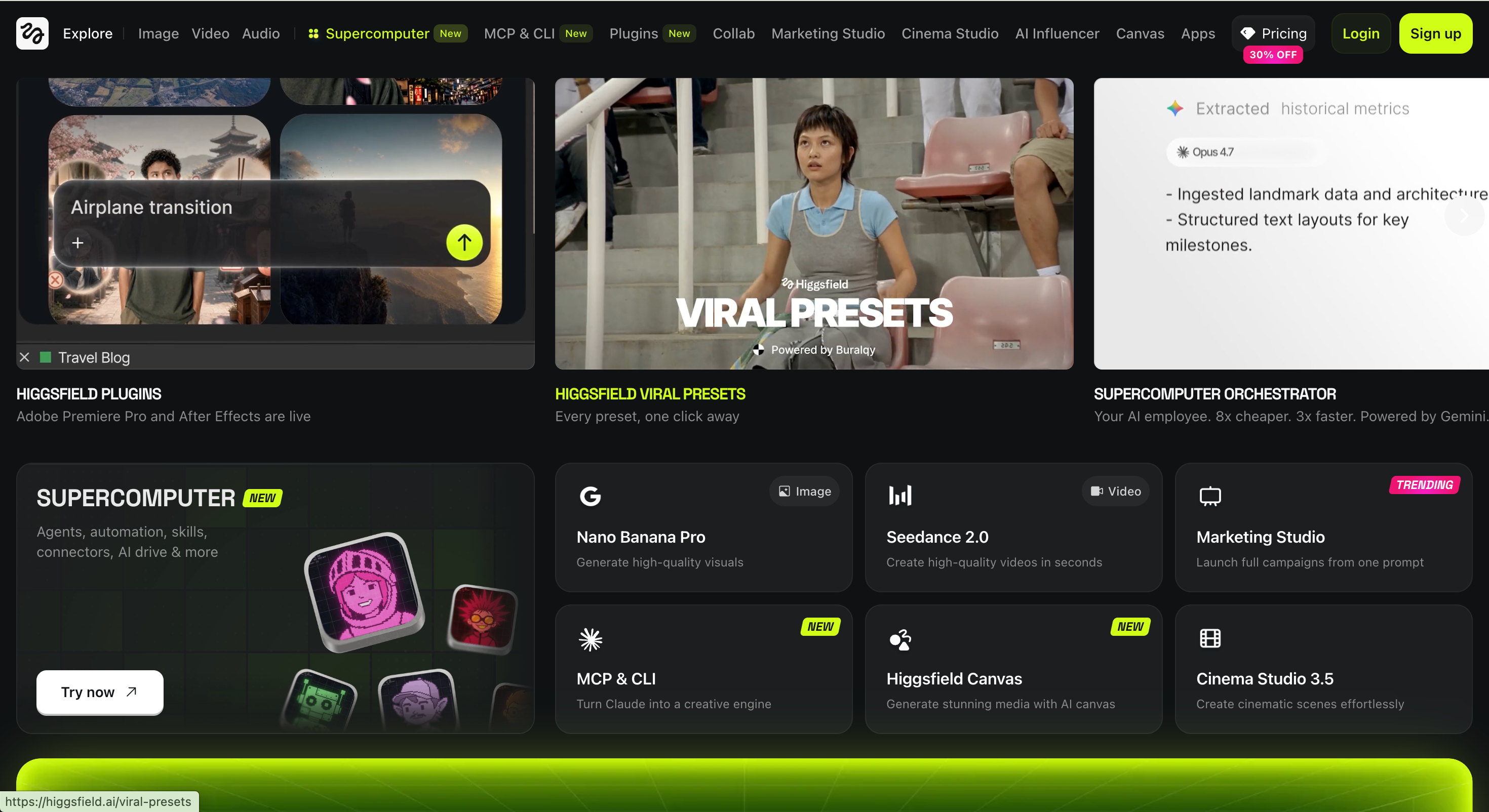
Higgsfield is a generative image and video platform with AI Influencer, Marketing Studio, Cinema Studio, Canvas, image tools, video tools, talking avatar, lip sync, UGC Factory, product placement, camera controls, and viral preset workflows listed on its site.
This makes it especially relevant for creators who want influencer content to feel more cinematic or trend-driven. Instead of only generating a clean portrait, the tool is useful for visual scenes, motion, camera looks, and short-form creative direction.
Pros:
Strong for cinematic influencer content and social video concepts.
Useful for fashion, beauty, product placement, and campaign visuals.
Offers more creative direction than basic avatar generators.
Good fit for creators who care about camera style and motion.
Supports both still and video-based influencer assets.
Cons:
May be more complex than a beginner needs.
Requires clear creative direction to avoid inconsistent output.
Not the simplest choice for someone who only wants a quick free avatar.
Best for:
Creative teams, fashion marketers, agencies, and advanced creators who want cinematic AI influencer scenes and short-form video campaigns.
3. MakeInfluencer: Best Dedicated AI Influencer Studio
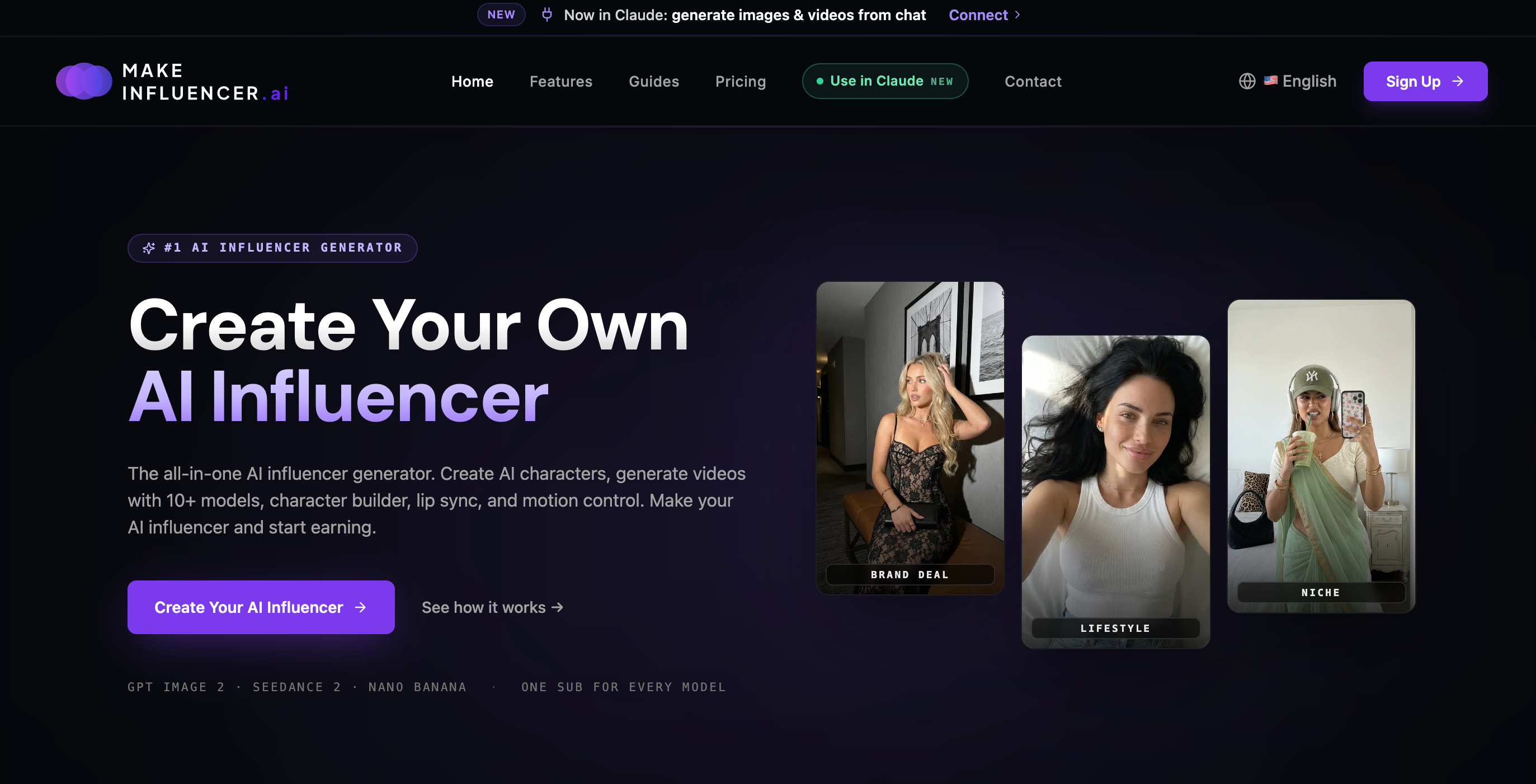
MakeInfluencer is one of the most directly named tools in this category. Its site calls it an AI influencer generator and describes features such as AI girls, video generation with multiple models, face swap, lip sync, motion control, image generation, AI UGC creation, and AI headshots.
This is a focused option for users who specifically want to create a virtual influencer rather than use a general-purpose creative tool. It is particularly relevant for social personas that need consistent faces, short videos, and lip-sync content.
Pros:
Clear focus on AI influencer creation.
Useful for users who want a direct persona-building workflow.
Face swap and lip sync support help with social video content.
Motion tools can make influencer posts feel less static.
Good fit for creators testing character-led accounts.
Cons:
Some positioning is creator-economy heavy, so brands should review tone and usage carefully.
Users should check current commercial rights, content rules, and platform policies before publishing.
May not be as broad as larger creative suites for campaign design.
Best for:
Creators who want a dedicated way to create AI influencer accounts with consistent images, lip sync, and short-form videos.
4. APOB AI: Best for Free AI Influencer Testing
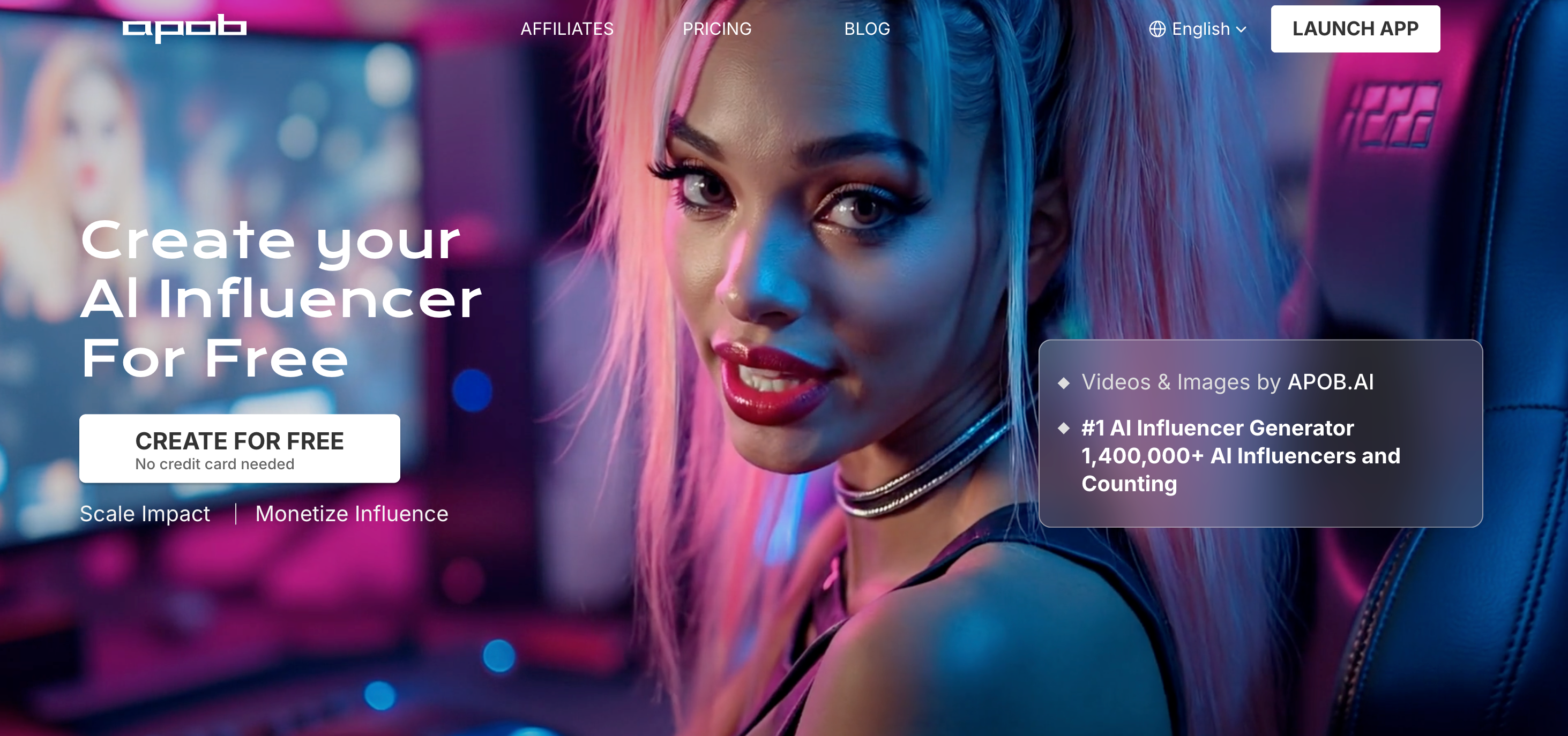
APOB AI positions itself around creating an AI influencer for free, personalized AI portraits, images, and videos. Its site says users can create for free without a credit card, references a large number of AI influencers created, and lists tools such as talking avatar, lip sync, image-to-video, text-to-video, video face swap, subtitles, and video editing.
This makes it useful for people who want to test the concept before investing. It is also relevant for users who need both image and video options, especially if they want to build a persona from a reference image or generate one from scratch.
Pros:
Strong fit for users searching for AI influencer maker free options.
Good for testing whether a virtual influencer concept is worth building.
Includes both still image and video tools.
Talking avatar and lip sync features support social content.
Offers customization options for persona design.
Cons:
Free access may have limits, credits, or quality restrictions.
Users should review commercial rights and monetization terms before using assets in campaigns.
Some marketing claims are aggressive, so brands should evaluate output quality directly.
Best for:
Beginners, faceless creators, and small teams that want a low-friction way to test AI influencer images and videos.
5. Magica: Best Treated as a Cautious Shortlist Item
The article framework includes Magica, but a current official product page for an AI influencer maker under that exact name was not verifiable during review; the magica.ai domain currently appears as a parked domain for sale.
For SEO completeness, it can still be included as a cautious shortlist item, but it should not be described with unverified features. If the user has a different Magica product URL, that source should be checked before publication.
Key features:
Product details should be verified from the correct official URL.
Treat as an unconfirmed option until the active product page is available.
Compare only after confirming AI influencer, avatar, image, and video capabilities.
Check whether free testing is available.
Review export quality and commercial usage terms.
Confirm whether it supports consistent character generation.
Confirm whether it supports video, lip sync, or only image assets.
Pros:
Worth investigating if the user has a specific active product link.
Could be relevant if it offers influencer, avatar, or persona tools.
Including it with caution avoids inventing unsupported claims.
Good reminder to verify niche AI tools before recommending them.
Cons:
Official AI influencer product information was not confirmed.
The visible domain checked during review was not an active product site.
Not enough public evidence to compare it fairly with established tools.
Should not be used in a buying recommendation without source verification.
Best for:
Users who already have a verified Magica product link and want to compare it against other AI influencer maker tools.
5. Imagine.Art: Best for Image-First AI Influencer Concepts
Imagine.Art is a broad AI creative suite with tools for images, videos, voice, effects, motion transfer, text-to-video, image-to-video, lip sync, style reference, and creative workflows. Its site also highlights ad creation and realistic image/video generation, which makes it useful for developing visual identities before turning a character into a full influencer workflow.
This platform is strongest when the first job is visual exploration. If a creator needs to test outfits, aesthetics, character moods, backgrounds, and profile visuals, it can be a good place to build the look of an AI persona.
Pros:
Strong for designing the visual identity of an AI influencer.
Useful for testing multiple styles before committing to a persona.
Supports both image and video workflows.
Good fit for fashion, beauty, lifestyle, and concept-driven characters.
Helpful for users who want one creative suite for many asset types.
Cons:
Not only built for influencer creation, so the workflow may feel broad.
Users may need to manage consistency carefully across generations.
More visual-asset focused than social-persona management focused.
Best for:
Creators and marketers who want to explore AI influencer looks, moodboards, portraits, short videos, and campaign visuals before building a long-term persona.
Conclusion
The best AI influencer maker depends on the type of persona a creator wants to build. For video-first workflows, PixGenN is a strong balanced choice because it supports avatar-style video creation, free testing, commercial-use output, multilingual voices, and flexible model options. For image-first visual identity, Imagine.Art is stronger. For cinematic social scenes, Higgsfield is more advanced. For dedicated persona creation, MakeInfluencer and APOB AI are more direct. For Magica, verify the correct active product before making a recommendation.
If the goal is to create AI influencer content for real marketing use, choose the tool by workflow: identity consistency, video quality, commercial rights, disclosure needs, and how easily the platform can produce repeatable social posts. A realistic face is only the beginning; the better long-term choice is the one that helps build a consistent, transparent, and legally safer virtual persona.
Frequently Asked Questions
Try PixGenN to turn your images into talking avatar videos in one click
No video editing skills required. Start for free.
Start Create Now